Sleeping Bag Liners for Warmth: Silk vs Fleece vs Cotton
By Anik Bose • 17th May
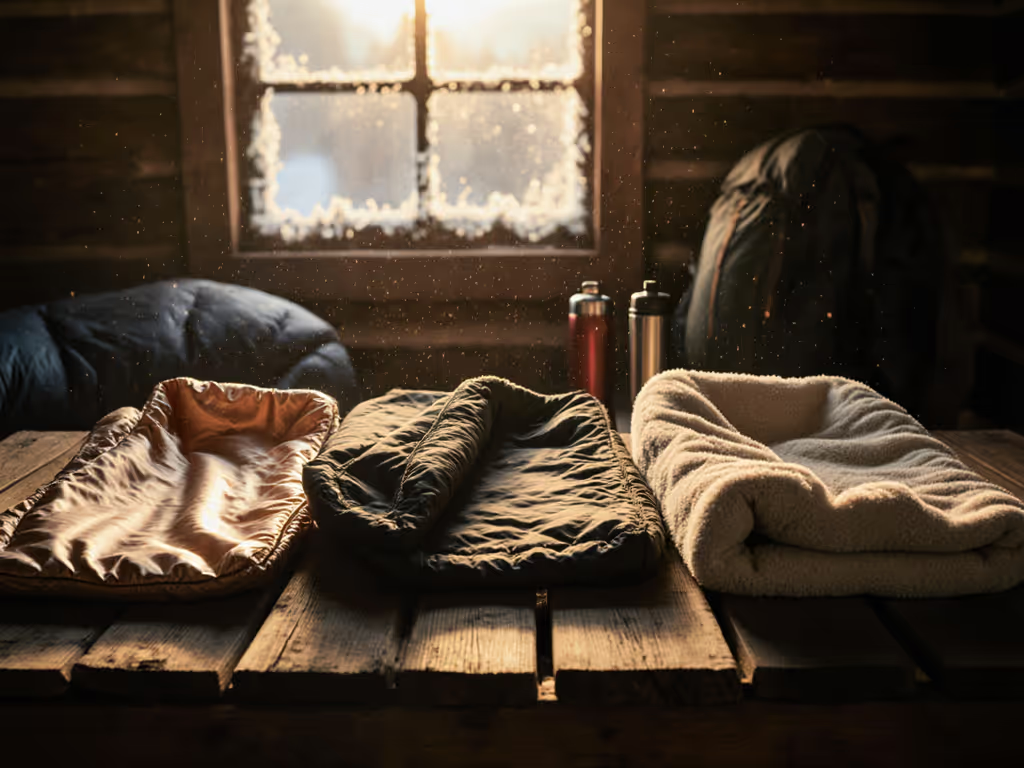
If you're comparing sleeping bag liners because you woke up cold in a "properly rated" bag, you're in the right place. This guide focuses on sleeping bag liners for warmth, with a data-driven look at how silk, fleece, and cotton actually change your system's temperature performance, plus where the marketing claims diverge from real nights outside.
Definitions up front
Before we compare materials, let's standardize language.
Sleeping bag liner A fabric sack or sheet used inside (or occasionally instead of) a sleeping bag to:
- Add some insulation (warmth)
- Improve comfort/feel
- Keep the bag cleaner
Thermal liner temperature boost The number of degrees (°F or °C) a liner is claimed to "add" to your sleeping bag's rating. It is usually not measured using the same ISO/EN protocol as the bag itself, so it's more a heuristic than a certified number.
Cold sleeper vs warm sleeper
- Cold sleeper: typically needs a bag rated 5-10°F (3-6°C) warmer than the air temperature to feel comfortable.
- Warm sleeper: can often match bag rating to air temperature or go slightly colder.
Standards inform; translation delivers real sleep in real weather.
Quick comparison: Silk vs Fleece vs Cotton for warmth
Here's the high-level view of how common silk sleeping bag liners, fleece liners, and cotton liners compare when warmth is your main concern. For a deeper dive into liner types, expected warmth gains, and hygiene benefits, see our sleeping bag liners warmth guide.
Approximate boosts below assume:
- A correctly rated ISO/EN 3-season bag
- R-value-appropriate pad (R ~3+ around freezing)
- Double-wall tent, light wind, dry fabric
- Average sleeper in base layers
| Material | Typical thermal liner temperature boost* | Weight & bulk | Moisture behavior | Best use cases |
|---|---|---|---|---|
| Silk | ~3-7°F (2-4°C) | Very light, compact | Wicks some moisture; dries fast | Backpacking, travel, mixed temps, hot sleepers |
| Fleece | ~8-15°F (4-8°C) | Heavy, bulky | Warm when damp; dries moderately | Cold sleepers, car camping, shoulder/winter add-on |
| Cotton | ~5-10°F (3-6°C) | Moderate, not tiny | Absorbs & holds moisture; slow to dry | Huts, cabins, car camping in dry climates |
*Plain-language note: these are field-translated ranges, not lab-certified numbers. A cold sleeper in a drafty shelter may see half the benefit; a warm sleeper in still air can sometimes see the upper end.
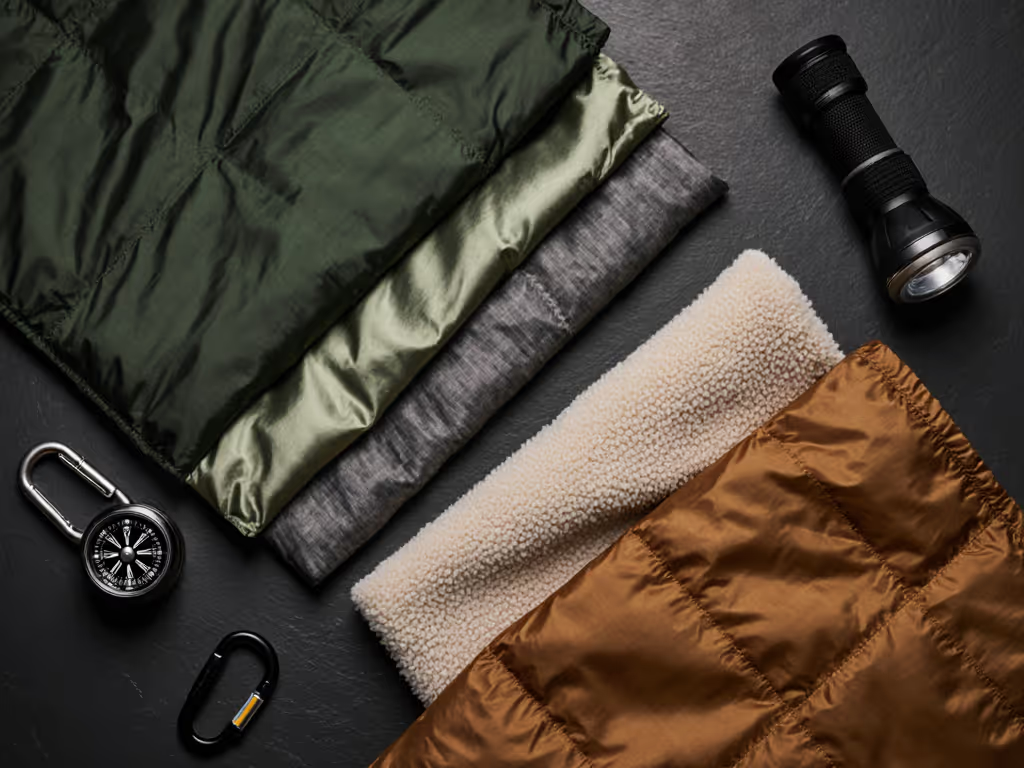
How "warmth" is actually measured (and why liner claims are fuzzy)
ISO/EN ratings are for bags, not liners
Most modern sleeping bags use the ISO 23537 (formerly EN 13537) standard:
- A heated manikin with sensors lies on a pad in a controlled chamber (still air, defined humidity).
- The result is a Comfort temperature (most cold-sleepers should sleep comfortably) and a Limit temperature (hunched male sleeper, more optimistic).
When I've watched manikins cycling through these protocols in a factory lab, everything is tightly controlled: pad R-value, air movement, humidity, clothing. What's rarely in that picture? A liner. And when liners are tested, it's often in internal brand protocols, not standardized, and not published in a way you can compare across brands.
So when you see "adds up to 25°F," treat it as best-case, ideal-condition marketing, not a guarantee.
A realistic translation for liner warmth
From published specs, brand internal data, and field measurements, you can use these rough expectations:
- Silk liners: 3-7°F (2-4°C) boost
- Light cotton liners: 5-8°F (3-5°C) boost
- Thicker cotton / flannel liners: 6-10°F (3-6°C) boost
- Fleece / insulated synthetic liners: 8-15°F (4-8°C) boost
Uncertainty ranges:
- Subtract 3-5°F (2-3°C) if: you're a cold sleeper, your pad R-value is marginal, or your shelter is drafty.
- Add 2-3°F (1-2°C) if: you're a warm sleeper, in a low-wind, double-wall tent, on a solid pad.
Lab-to-field translation: If a brand claims +15°F from a fleece liner, plan on ~8-10°F in shoulder-season, real-world use unless the rest of your system is dialed.
Method first, model second, field test: treat any number as a starting hypothesis you'll verify on your own trips.
Silk Sleeping Bag Liners: Warmth per ounce and moisture control
Warmth profile
Silk sleeping bag liners are primarily about comfort, hygiene, and a modest thermal bump.
- Realistic boost: 3-7°F (2-4°C)
- Key behavior: They cut drafts a bit, slow convective heat loss around your skin, and add a thin layer of trapped air.
For a 30°F (-1°C) bag:
- A typical sleeper might be comfortable down to ~26-28°F (-3 to -2°C) with a silk liner.
- A cold sleeper might notice comfort at ~28-30°F but little extra margin below.
Moisture and comfort
Strengths:
- High breathability and fast dry time.
- Reduces clamminess in humid conditions compared with nylon interiors.
- Excellent next-to-skin feel for people sensitive to "plasticky" fabrics.
Limitations:
- Not a game-changer for deep cold. If you're pushing a 30°F bag into the teens (-7°C or below), silk alone is not enough.
Who silk suits best
Silk liners are ideal if you:
- Backpack in variable 3-season conditions, including warm nights.
- Run medium to warm and mainly want comfort + small buffer.
- Care a lot about packability and weight.
If you already own a 20°F bag and an R 4+ pad, a silk liner is an efficient way to smooth out chilly but not extreme nights without overhauling your kit.
Fleece Liners: Maximum warmth, maximum bulk
Warmth profile
Fleece liners are generally the warmest common option among sleeping bag liners for warmth.
- Realistic boost: 8-15°F (4-8°C) depending on fleece thickness and fit.
- Field effect: Feels like wearing a light to midweight fleece onesie inside your bag.
Example translation:
- A 20°F (-7°C) bag + good R 4.5 pad + fleece liner can feel comfortable to many sleepers around 12-15°F (-11 to -9°C) in a protected tent.
- A cold sleeper should still leave some margin and call it ~18°F (-8°C).
Moisture and comfort
Strengths:
- Fleece insulates reasonably well when damp.
- Dries quicker than cotton if it does get sweaty or from condensation.
- Stretchy, good for restless or side sleepers.
Limitations:
- Bulky and heavy relative to the warmth of simply choosing a warmer down bag.
- In humid or shoulder-season conditions, some people overheat and then feel chilled in the early hours when sweat cools.
Who fleece suits best
Fleece liners shine when:
- You're car camping, van camping, or hut camping, where bulk is minor.
- You're a cold sleeper wanting a generous margin for shoulder-season trips without buying a second, heavier bag.
- You see mixed conditions where you might use the fleece liner alone on warm nights and inside a bag when it's colder.
If you're counting ounces and liters in a fast-and-light kit, a thick fleece liner is usually less efficient than upgrading to a slightly warmer sleeping bag or better pad.
Cotton Liners: Moderate warmth, high comfort, fussy in moisture
Warmth profile
Cotton liners sit between silk and fleece for warmth:
- Realistic boost: 5-10°F (3-6°C) depending on fabric weight.
- Feel: cozy and familiar, especially in flannel or brushed weaves.
Example translation:
- A 40°F (4°C) bag plus a medium-weight cotton liner might feel OK for many users around 35°F (2°C), assuming low humidity and a decent pad.
Moisture and comfort
Strengths:
- Feels like bed sheets, a big psychological comfort upgrade for some.
- Durable and often cheaper than silk.
Limitations:
- Absorbs and holds moisture. In damp climates or condensation-prone tents, cotton can become clammy and slow to dry. Learn how humidity steals warmth and how to combat it in our moisture management guide.
- Heavier and bulkier than silk for similar warmth.
Who cotton suits best
Cotton or cotton-blend liners fit best when you:
- Car camp or stay in huts, hostels, and cabins, where drying is easy.
- Prioritize familiar sheet-like comfort and hygiene over packability.
- Camp mostly in dry climates and mild temperatures.
If you frequently deal with coastal humidity, fog, or condensation-heavy single-wall shelters, cotton is rarely the optimal choice.
How liners interact with your pad, bag, and shelter
A liner is only one layer in a sleep system. Its impact depends heavily on what's under and around you.
1. Pad R-value: the silent limiter
If your pad's R-value is too low for the temperature, no liner will fully solve the problem. For system-level strategies beyond liners, see our guide to staying warm in your sleeping bag.
Rule of thumb:
- Around freezing (32°F / 0°C): target R ~3-4 minimum.
- Mid-20s°F (~-4°C): R 4-5.
- Colder than that: R 5+ or combine two pads.
If you're shivering from below on an R 1.5 pad at 30°F, a fleece liner might make you less miserable, but it won't transform the system. Upgrade the pad before banking on liners.
2. Bag rating and cut
A liner can't fix a bag that's:
- Underrated (optimistic temp spec).
- Too tight, compressing insulation.
- Too roomy, creating large dead-air pockets. If fit is the issue, use our sleeping bag size guide to avoid cold spots from dead air or insulation compression.
What a liner can do:
- Slightly reduce drafts in roomy bags.
- Make a borderline-warm bag feel "just enough" in shoulder seasons.
3. Shelter and wind
Liners assume you're not losing lots of heat to wind:
- In a double-wall tent or solid 3-season tent, liner boosts will be closer to the upper ranges.
- In a tarp, bivy, or very drafty tent, expect a liner to recover only part of the additional convective loss.
Lab-to-field translation box
Scenario:
- 20°F (-7°C) ISO-rated bag (Comfort near 21-25°F for many users)
- R 4.5 pad, double-wall 3-season tent, light wind
- Average sleeper in base layers
Predicted comfort temperatures:
- No liner: Comfortable to ~25°F (-4°C)
- Silk liner: ~21-23°F (-6 to -5°C)
- Cotton liner (med-weight): ~20-22°F (-7 to -6°C)
- Fleece liner: ~15-18°F (-9 to -8°C)
Shift each of those up 5°F / 3°C warmer if you know you're a cold sleeper, or if your shelter is very drafty.
FAQ Deep Dive: Choosing the right liner for warmth
1. Can a liner turn my 30°F bag into a 15°F bag?
Not reliably.
- A fleece or insulated liner might realistically give you ~10°F (6°C) of usable margin.
- Pushing a 30°F bag to 15°F based only on a liner assumes best-case conditions, a warm sleeper, and a perfect pad and shelter.
If you routinely expect 15°F nights, a properly rated bag or quilt plus an appropriate pad is the safer path, with a liner as fine-tuning, not the core solution.
2. Which liner is best if I'm a cold sleeper?
Prioritize fleece or insulated synthetics for real temperature boosts, and pair them with a solid pad.
Ranking by warmth reliability for cold-sleepers:
- Fleece / insulated synthetic liner
- Heavier cotton / flannel (dry climates)
- Silk (great comfort, small boost)
But verify your system on a low-risk overnight (close to home or car) before depending on it in remote terrain.
3. What's best for warm climates or hot sleepers?
You're more likely to fight overheating and sweat than raw cold.
- Silk liner: Top choice, breathable, light, feels cooler in hot weather, yet adds a little buffer for pre-dawn temperature dips.
- Thin cotton liner: Fine for dry, warm car camping or huts, but watch moisture in humidity.
- Avoid thick fleece unless night lows truly justify it.
In hot climates, many people use a silk or cotton liner alone and leave the sleeping bag open or at home.
4. Is a liner better than just wearing more clothes to bed?
They do different things:
- Clothing layers (base, fleece, puffy) are excellent at preserving warmth, especially your core.
- A liner improves comfort, manages moisture on the bag interior, slightly reduces drafts, and adds a uniform thin layer around your body.
If forced to choose for warmth alone:
- For backpacking, one more clothing layer (like a dedicated sleep base layer + light puffy) is often more flexible than a heavy liner.
- For hygiene, comfort, and moderate warmth combined, a light liner (silk or thin synthetic) is very effective.
Use both if you're pushing the bottom end of your bag rating.
5. Do liners change my bag's ISO/EN rating?
No. The rating on the label remains the same.
You can think of the liner as shifting your personal comfort point relative to that rating by a small amount. But there's no standardized way to say, for example, "20°F ISO bag + silk liner = new ISO Comfort 15°F."
Treat liner boosts as personal calibration, not official re-ratings.
6. Should I buy a warmer bag or add a liner?
Use this decision framework:
- Upgrade the pad first if your R-value is low for expected temps.
- Add a liner if:
- Your bag is close, just slightly cool at the low end.
- You want improved hygiene and comfort anyway.
- You travel in a wide range of temps and might use the liner alone sometimes.
- Buy a warmer bag if:
- You're consistently pushing your current bag more than ~10°F (6°C) beyond comfort.
- You camp in serious cold and want a predictable margin of safety.
7. How do these materials compare for durability and sustainability?
- Silk: Strong for its weight but can snag on rough skin or gear. Biodegradable, but production has its own impacts. Best treated gently and washed in mild detergents.
- Fleece (polyester): Mechanically durable but contributes microplastics when washed. Buy once, wash in a bag or with filters if you're concerned.
- Cotton: Very durable fabrics if tightly woven. Conventional cotton is resource-intensive; organic options mitigate some impacts.
From a buy-once-cry-once perspective, silk and good fleece liners can easily last many seasons if cared for, which spreads out their footprint and cost.
8. What's the best way to care for a liner so it stays warm?
- Wash regularly: Body oils reduce fabric loft and feel over time.
- Mild detergent: Aggressive detergents and fabric softeners can change fabric feel and wicking. Skip softeners.
- Air dry when possible: Especially for silk and cotton; fleece tolerates low-heat machine drying.
- Store dry and uncompressed: Stuff sacks are for transport, not long-term storage.
Good care keeps the fabric performing closer to its original warmth and comfort.
Wrapping up: Turning liner specs into real warmth
Silk, fleece, and cotton liners all have a place in your sleep system:
- Silk: Best for backpackers and travelers who want a small but real temperature bump, better moisture handling, and luxurious feel at minimal weight.
- Fleece: Best for cold sleepers and car campers who need a substantial warmth increase and don't mind bulk.
- Cotton: Best for dry-climate car camping and hut travel where comfort and hygiene outrank packability and moisture performance.
For further exploration, treat your sleep system like a small experiment:
- Log temperature, pad R-value, shelter type, clothing, and which liner you used.
- Note when you were "just right," "slightly cool," or "too hot."
- After a few trips, you'll have your own calibrated table that maps conditions to combos that work, for your metabolism and your gear.
The lab side, with its manikins and climate chambers, gives us consistent starting points. The field side (your nights, in your climate) is where those numbers earn their keep. Use both. Standards inform; translation delivers real sleep in real weather.
Related Articles