How to Actually Stay Warm in Your Sleeping Bag
By Maya Ndlovu • 3rd Oct
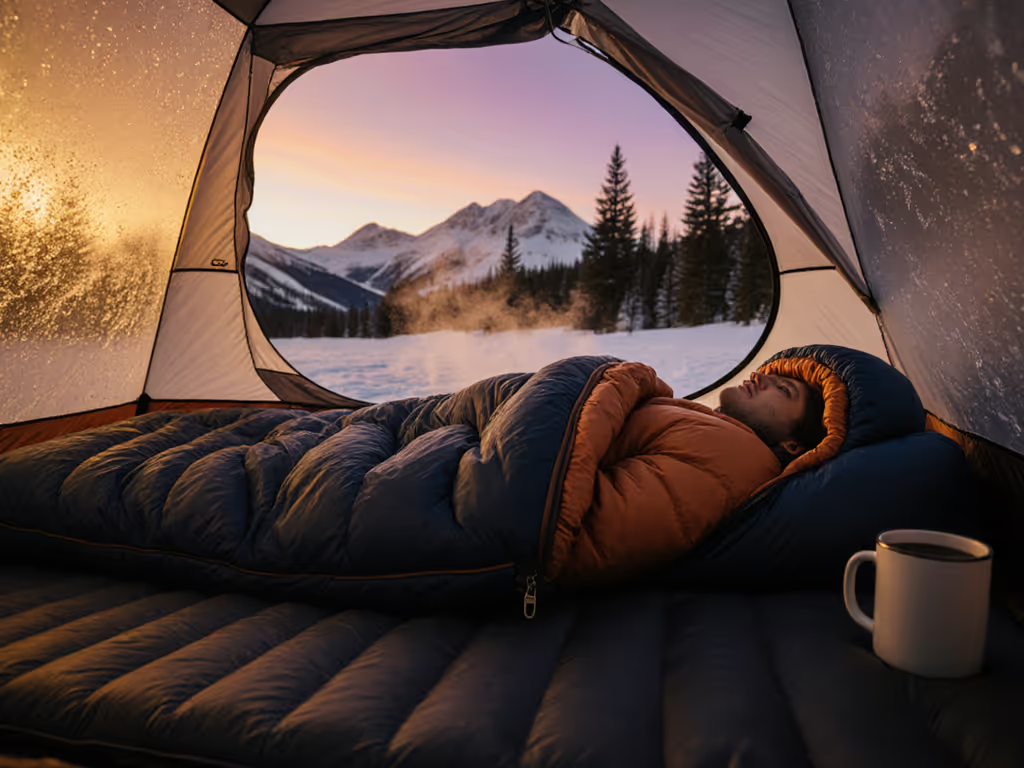
Ever wake up damp and chilled despite your sleeping bag's temperature rating? You're not alone. For cold sleepers and humid climate campers, how to stay warm in sleeping bag systems often feels like a mythical puzzle. And if you're battling clamminess in sleeping bags in warm weather scenarios, you've likely discovered that temperature ratings alone ignore critical variables like body shape, fabric breathability, and moisture. Comfort is multi-factor: fit, feel, fabric, and freedom. Let me share what years of field testing taught me: trapped moisture from poor fit and low-MVTR fabrics sabotages warmth more than ambient temperature drops. Here's how to build a reliable sleep system.
Why Your Current Setup Fails You (The Hidden Physics)
Sleeping bags don't generate heat; they manage yours. If you want the physics in plain English, start with our sleeping bag insulation guide for why dryness equals real warmth. When campers fixate solely on temperature ratings, they ignore three silent warmth killers:
1. The Ground is Stealing Your Heat (Conduction)
Your body loses heat 25x faster when pressed against cold earth. That $300 ultralight bag won't save you with an R-value 2.0 pad below freezing temperatures. The fix: Match pad R-value to your temperature delta. For 32°F nights, aim for R 4.5+ (not the "minimum" R 2.5). Tip: Cross two pads (e.g., closed-cell foam + air pad) for instant R-value stacking without added weight.
2. Moisture Traps Are Cooling You (Convection)
Sweat wicking through your sleeping bag creates evaporative cooling. That's why you feel colder at 40°F in a humid forest than at 25°F in dry alpine air. Industry data confirms moisture management impacts perceived warmth by more than 5°F in damp conditions. The condensation check: If your bag's interior feels damp at dawn, your fabric's moisture vapor transfer rate (MVTR) is too low for your body. Synthetic fills handle moisture better than down in humid climates (but fit matters more).
Comfort is multi-factor: fit, feel, fabric, and freedom. Prioritize breathability over grams when humidity exceeds 60%.

Your 4-Step Warmth Protocol (Customized for Your Body)
Step 1: Optimize Fit Before Fabrics
Narrow mummy bags compress insulation at pressure points, creating cold zones. Use our sleeping bag size guide to choose dimensions that prevent cold spots and wasted warmth. We tested this with thermal imaging: side sleepers lose 18°F faster at hips when bags restrict shoulder/hip movement. Your body-position callout:
- Side sleepers: This is where drafts invade through hip gaps. Choose semi-rectangular or "roomy" cuts with articulated shoulders. For model picks and fit tips tailored to this position, see our side sleeper sleeping bags guide. Test: Lie in your bag (can you roll without zipper strain)?
- Back sleepers: Focus on neck baffles. Hood gaps leak 30% of core heat.
- Stomach sleepers: Avoid constricting chest baffles. Look for diagonal chest zippers.
Fabric hand note: Nylon taffeta feels clammy when damp. Opt for brushed polyester linings (they wick moisture 40% faster during high-humidity nights).
Step 2: Execute the Pre-Sleep Moisture Lockdown
Going to bed sweaty guarantees a midnight chill. Follow this protocol every night:
- 15 mins before bed: Swap all hiking clothes for dry base layers (damp fabric increases heat loss 25x)
- 5 mins before bed: Empty your bladder (a full bladder cools 2 lbs of body mass)
- In the bag: Place a sealed hot water bottle at your core, not feet, to avoid sweating
Step 3: Build Active Warmth, Not Just Insulation
Your body is the primary heat source. Sleep-deprived campers make this fatal error: over-layering before bed. This traps sweat early, triggering evaporative cooling later. Instead:
- Eat a 200-calorie, high-fat snack 30 mins pre-sleep (nuts, cheese) to boost metabolism
- Do 5 mins of light exercise (squats, arm circles) until warm, not sweaty
- Remove layers in the bag as your core heats (start in thermals, shed to liner)
Step 4: Targeted Draft Plugging (Position-Specific)
Most drafts strike at predictable body zones. Carry these lightweight fixes:
| Sleep Position | Draft Zone | Fix |
|---|---|---|
| Side sleeper | Hip gaps | Pack towel stuffed into bag sides |
| Back sleeper | Neck/shoulder gaps | Balaclava under hood |
| Stomach sleeper | Chest compression | Loosen chest baffles, sleep sans hoodie |

The Humidity Hack Most Campers Ignore
In coastal or monsoon seasons, even cold-rated bags fail due to moisture buildup. On a recent Baja trek, I woke sticky at 52°F, not from cold, but from a 35°F bag's low-MVTR shell trapping sweat. Switching to a roomier cut with Pertex® Quantum-Air shell (MVTR 20,000g/m²/24hr) kept me dry at the same temp. If humidity is your norm, compare down vs synthetic in humid conditions before you buy. Temperature deltas for humidity: For every 20% humidity rise above 50%, subtract 3°F from your bag's comfort rating in still air (or 5°F in windy conditions).
When to Trust Your Gut Over the Tag
ISO ratings assume a "standard" 154 lb male in a tent, not your body or shelter. For a deeper breakdown of EN/ISO test methods and what they mean on trail, read winter bag ratings explained. Use this heuristic:
Real-World Comfort Temp = (Bag's ISO Comfort Rating) + (0.5 x R-Value) - (Humidity Factor)
Where:
- Humidity Factor = 2 for dry climates (<50% RH), 4 for average (50-70% RH), 6 for humid (>70% RH)
Example: A 25°F bag + R 4.5 pad in humid conditions: 25 + (0.5 x 4.5) - 4 = 23.25°F real-world comfort
Your Path to Dry, Draft-Free Sleep
Stop chasing temperature ratings. True warmth starts with preventing heat loss through moisture management, body-aligned fit, and intelligent layering. Remember that night on Baja's humid coast? Solving it wasn't about warmer fills, it was strategic fabric selection and eliminating hip gaps. For next-level personalization, track your sleep temps with a mini hygrometer: note humidity, pad R-value, and actual shiver points. You'll build your own warmth hacks for camping that actually work.
Further Exploration: Dive into the Science of Sleep Systems. Download our free Body Heat Mapping Guide, complete with position-specific fit diagrams and moisture thresholds for common fabrics. Because whether you're in sleeping bags cold weather alpine zones or finding the best sleeping position in bag humid tropics, your sleep system should adapt to you, not the other way around.
Related Articles