Quilt vs Mummy: Temperature Performance Explained
By Anik Bose • 27th Feb
Understanding What Temperature Ratings Actually Mean
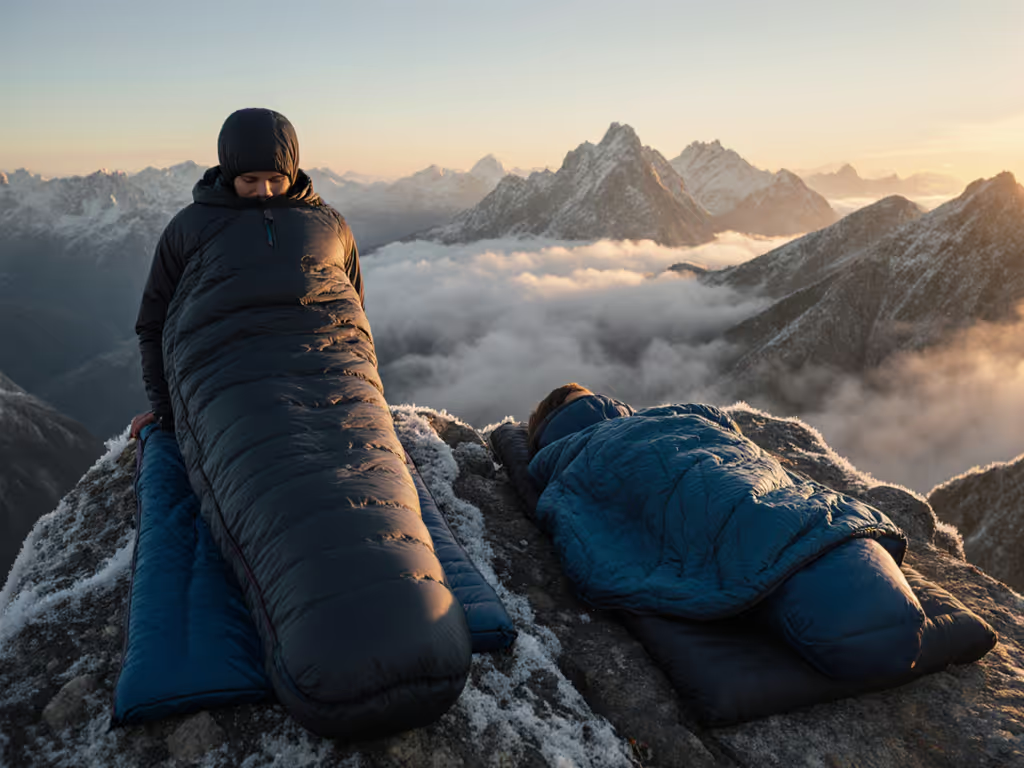
Before comparing quilts and mummy bags, we must establish what their temperature ratings represent (and what they do not). Most contemporary quilts and bags sold in North America are rated according to ISO 23537 or EN 13537, standards that define four temperature thresholds per product: the comfort limit (the lowest temperature at which a "standard" sleeper can rest comfortably), the lower limit (survival threshold, not comfort), the extreme rating (brief survival only), and sometimes a transition temperature (upper comfort). Critically, these ratings assume specific conditions: a sleeper of average metabolism wearing standard base layers, on an insulated pad with defined R-value, in still air with no wind load.[1][6]
This distinction matters profoundly. A "20°F quilt" does not guarantee a warm night at 20°F. It specifies performance under controlled lab conditions (conditions almost never replicated in the field). For a deeper primer on interpreting EN/ISO numbers in real weather, see our temperature ratings explained guide.
Definitions: Comfort Limit vs. Lower Limit
The comfort limit is the temperature at which a "standard" sleeper (defined by ISO as a 25-year-old male of average physiology, basal metabolic rate ~85 W/m²) reports thermal comfort in a controlled lab environment. This is the number manufacturers and retailers emphasize.[1][2]
The lower limit is roughly 5-10°F colder than the comfort rating. At this threshold, the sleeper is not comfortable; survival is plausible, but sleep quality is not.[2]
For women and cold sleepers, the rule of thumb documented in gear forums and empirical field testing is a 10°F adjustment upward (meaning a "20°F bag" rated for men functions more like a 10°F bag for most women due to differences in surface area-to-mass ratio and resting metabolism).[2][5]
The Core Design Difference: Material and Heat Retention
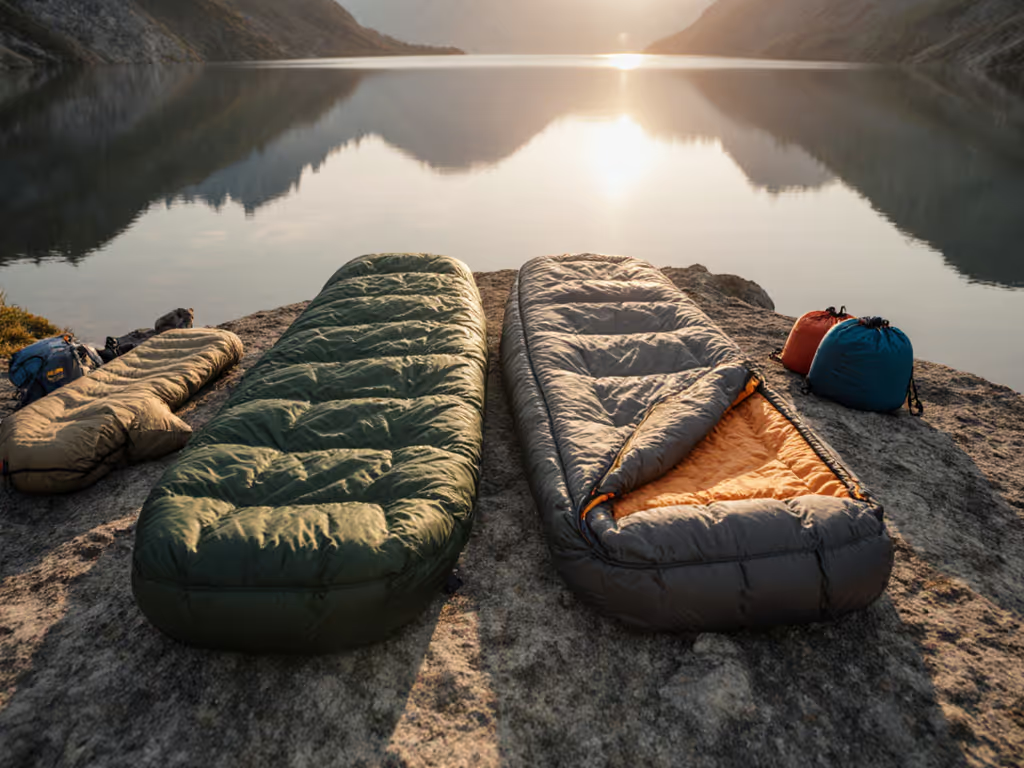
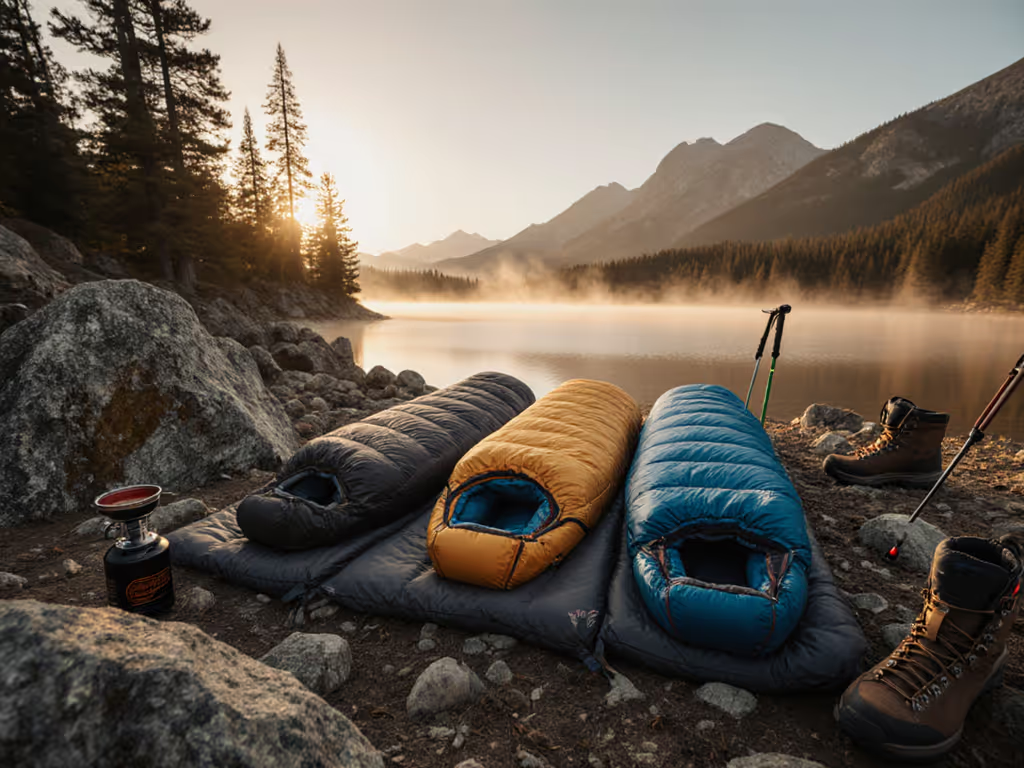
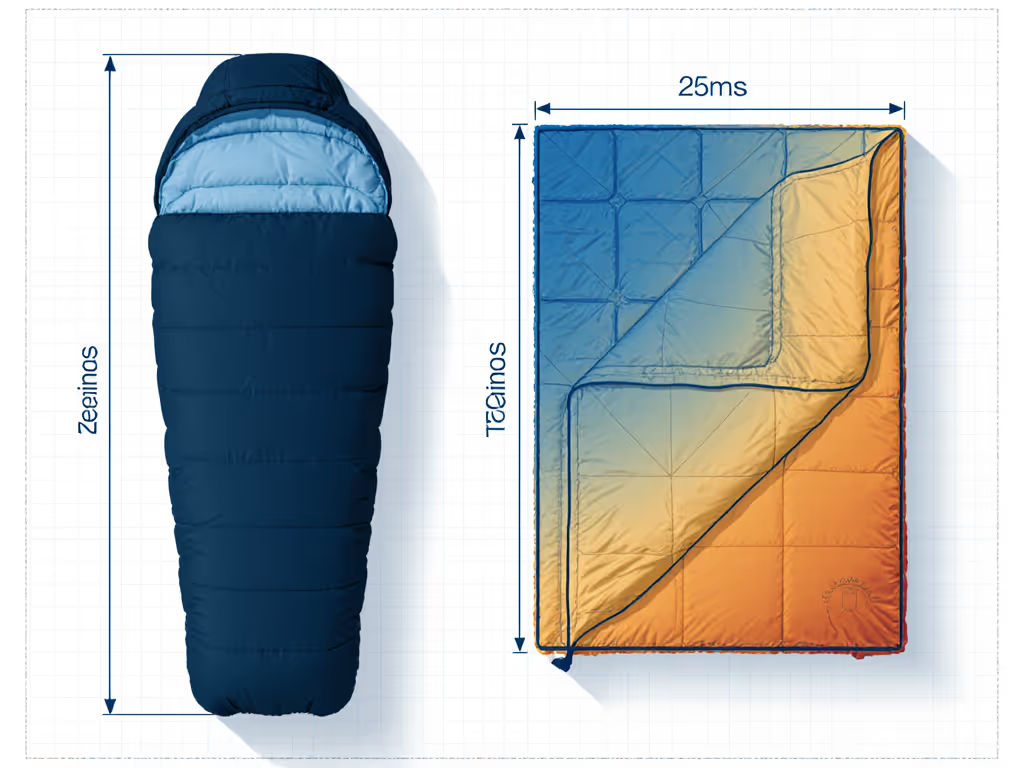
A mummy bag is a fully enclosed cocoon with a draft collar, hood, and zippered construction that seals in nearly all warm air. A quilt is an open-backed layer without a full hood or zipper, it functions more like a blanket anchored to an insulated pad, with a foot box that approximates the closed section of a mummy. For a fuller pros-and-cons breakdown beyond temperature, read our sleeping bags vs quilts comparison.
The consequence: quilts use 15-30% less material to achieve the same temperature rating as a mummy bag, translating directly to lower weight and pack volume.[1][4] A 20°F down quilt will typically weigh 16-24 oz, while a 20°F down mummy bag weighs 24-32 oz. Both can deliver equivalent warmth, but the quilt's design eliminates dead-air space created by a rigid hood and reduces the weight penalty of a full back panel.
Lab-to-Field Translation: What Standards Don't Tell You
During a factory tour of a leading gear manufacturer, I watched a thermal manikin cycle through ISO protocols, sensors logging temperature differentials, chamber conditions precisely controlled, air movement eliminated, pad R-value fixed at specification. Impressive standardization. Yet the moment you step outside the lab into wind, humidity variability, single-wall shelter condensation, and a human body that shifts positions, the rating becomes conditional rather than predictive.
Assumptions disclosed, limitations: Lab ratings presume four things the field rarely grants:
- Pad R-Value Integration: A 20°F quilt is only tested at a defined R-value, typically 4.0-5.0. If your pad is R 3.0, warmth drops roughly 5-8°F in the real world.[6]
- Still Air: Mummies and quilts both degrade in wind. A mummy's zippered hood offers marginal protection; a quilt's open top exposes your head and neck unless paired with a hooded jacket or bivy. Wind-driven infiltration can negate 10-15°F of rating in exposed alpine terrain.[4][5]
- Sleep Position and Compression: A mummy bag's snug fit can compress insulation under your body, rendering that section ineffective. Quilts mitigate this by allowing you to shift atop the pad, but only if your pad is wide enough and your quilt is sized to cover your shoulders without drafting.[4][5]
- Moisture Management: Down performs poorly when damp. Quilts in high-humidity environments or coastal rain seasons face higher condensation risk than mummies with tighter construction, unless you employ a vapor barrier liner (VBL) or synthetic insulation.[1]
Warmth Efficiency: Where Quilts Edge Ahead - With Caveats
The research consensus from gear forums, manufacturer testing, and empirical field data is clear: down quilts deliver superior warmth-to-weight ratios compared to down mummies at the same temperature rating.[1][4] Why?
- No Dead Air: A mummy's hood and back create sealed air pockets that add weight without contributing warmth if you're sleeping supine with your head outside the hood (common in warmer parts of your comfort range).
- Versatility: A quilt can be opened fully on warm nights or gathered tight on cold nights, effectively broadening its usable temperature window without adding weight.
- Pad Synergy: When you move on a pad, a quilt lofts unevenly (foot end compressed, torso lifted). If designed well with baffles that align with how humans actually sleep, this uneven loft can be an asset; insulation redistributes to where you need it most.[6]
However, quilts demand discipline and knowledge:
- Draft vulnerability: An improperly sized quilt or poor neck-seal design allows cold air infiltration around your neck and shoulders, a common complaint from cold sleepers who switched to quilts without understanding quilt-specific design parameters.[4][5]
- Pad dependency: A quilt with inadequate draft collar or width will pump cold air as you move, especially if your pad is too narrow or too soft (low R-value, high compliance). Mummies are less sensitive to this variable.[2]
- Hood requirement: Unlike mummies with integrated hoods, quilts require you to wear a hooded jacket or beanie for neck warmth in cold camps, an additional 2-4 oz that technically eats into the quilt's weight advantage.
Synthetic vs. Down: Temperature Rating Trade-Offs
Down delivers the highest warmth-to-weight ratio but fails when wet. For an in-depth breakdown of moisture resilience, weight, and cost, read our down vs synthetic sleeping bags guide. Synthetic insulation (polyester blends) absorbs moisture and insulates when damp, but requires 10-20% more weight for the same temperature rating.[1]
For quilts: synthetic quilts are often the practical choice for humid climates, rainy seasons, or if you prioritize durability over ultimate ounce-counting. Down quilts suit dry alpine camps and weight-obsessed thru-hikers willing to manage condensation via VBLs or dry-storage protocols.
Personal Variability: Why the Same Rating Feels Different
Temperature ratings are designed for a statistical "average" sleeper. You likely are not average.
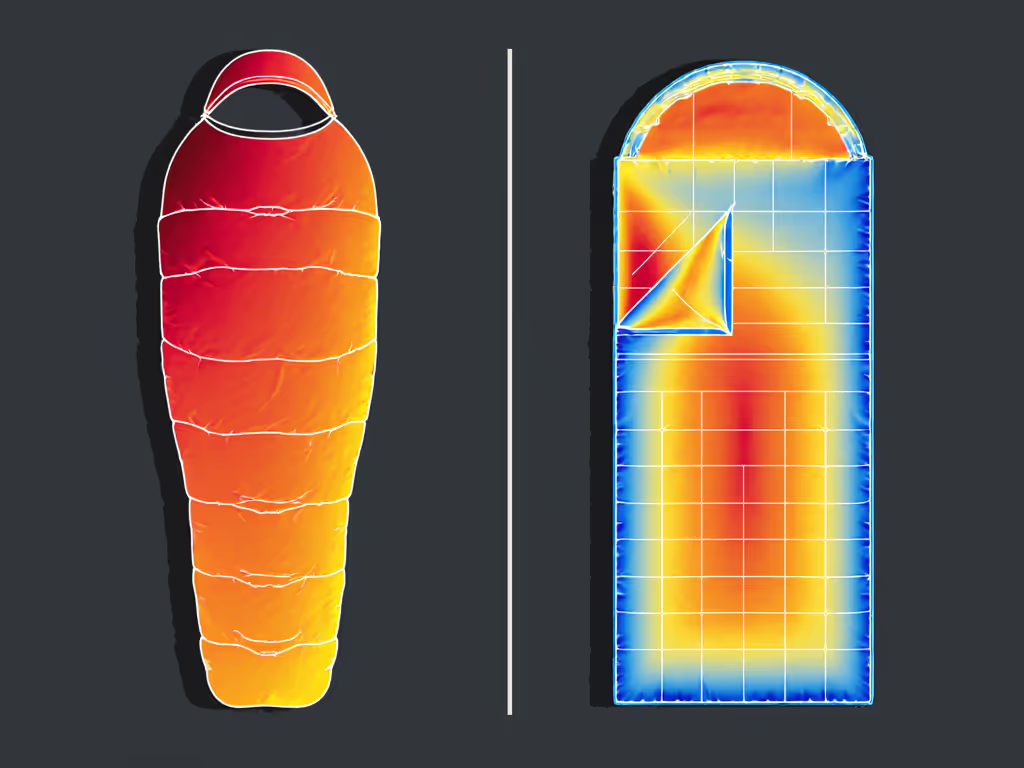
Sleep Position and Compression: Side sleepers often compress insulation unevenly in a mummy, creating cold spots on their upper shoulder and hip. Quilts mitigate this by allowing you to adjust coverage, but only if you're not a chronic thrashing sleeper who continuously pumps cold air into the quilt.[2][4]
Metabolism: A 140-lb woman will sleep colder than a 200-lb man in the same bag at the same ambient temperature, not due to psychology but due to basal metabolic rate and skin surface area. Women's-cut bags exist (narrower, with shifted insulation distribution), but many bags are "nominally womens'" while maintaining the men's comfort rating. A practical heuristic: women should add 10°F to any comfort rating when shopping, or verify the women's-specific comfort threshold.[2][5] Translate lab ratings to your biology with our personal warmth offset guide.
Resting Metabolism and Acclimatization: Cold-adapted athletes can sometimes sleep warm in lighter bags than sedentary individuals. This is real but unpredictable; don't plan your gear around being "tough." Build in a safety margin.
Mummy Bags: When They Win
Despite quilts' weight advantage, mummies remain the better choice in specific scenarios:
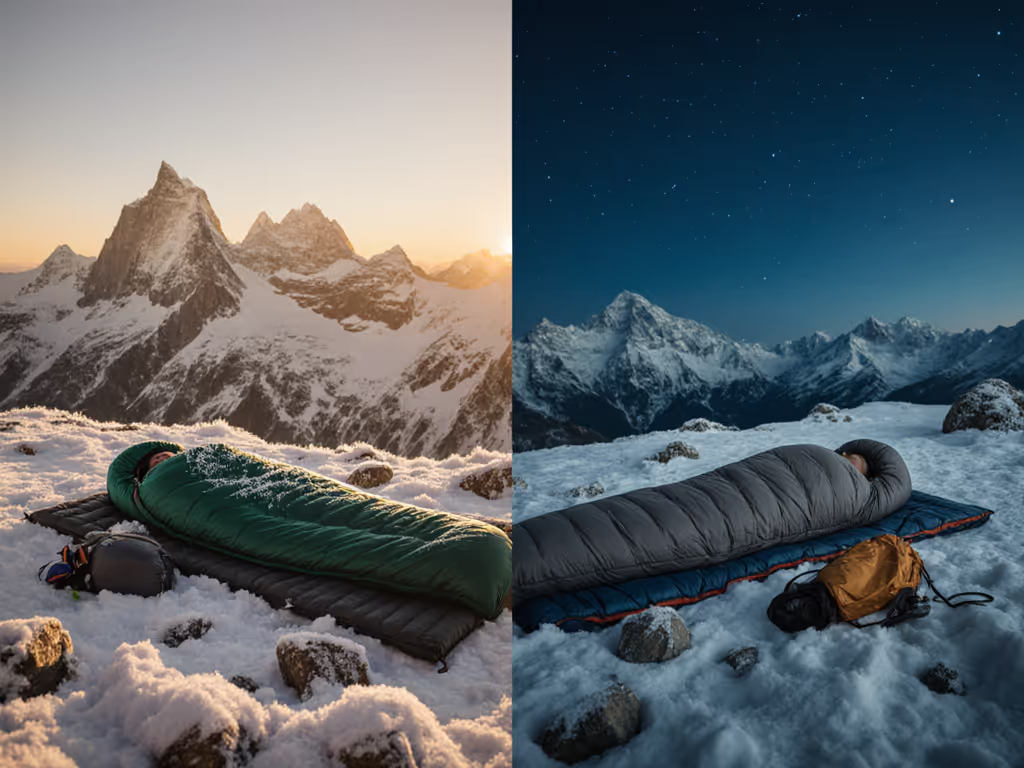
- Very Cold Conditions (Below 0°F): The integrated hood and draft collar of a mummy provide more reliable neck and face protection than a quilt without requiring you to wear a hooded bivy or jacket. For expedition sleeping, this matters.[2]
- Restless Sleepers and Thrashing: If you continuously shift from side to back to stomach, a mummy's circumscribed design prevents you from accidentally unmaking your insulation layers. Quilts require stillness or a bivy wrap to perform at their rated temperature.[2]
- Simplicity and Learnability: A mummy bag requires less system knowledge. Slide in, zip up, manage the draft collar. Quilts demand pad width verification, draft-collar sizing, and often a supplementary hooded layer.
- Multipurpose Use: Mummy bags double as emergency wraps or ground insulation repair; quilts are specialized for prone sleep systems.
Scenario-Based Decision Framework
Three-Season Backpacking (Spring/Fall, Temperate Zones)
A 20°F quilt with an R 4.0+ pad is typically lighter and more versatile than a 20°F mummy. Quilts excel when temperature swings 30-50°F within a night, as you can easily adjust coverage. Choose down if your trips are dry; synthetic if coastal or monsoon-adjacent.
Alpine and High-Elevation Camps (Summer/Fall, 8,000-12,000 ft)
Temperature swings are dramatic (50°F day, 25°F night). Wind is constant. A quilt rated to 15°F with a high-quality draft collar and paired with a hooded insulated jacket will outperform a 20°F mummy in weight and usability. Verify the quilt's shoulder width (should be 60+ inches) to prevent side-sleeper drafts.[6]
Winter and Expedition (Below 0°F)
A 0°F or -10°F mummy with an integrated hood is your safest bet. Quilts at this extreme require supplementary insulation (VBL, hooded bivy, expedition-weight jacket), negating the weight advantage.
Rainy Coastal Regions and Wet Seasons
Synthetic quilts or synthetic mummies. Down's failure risk is not worth the weight savings. A synthetic 20°F quilt at 24 oz will outweigh a synthetic 20°F mummy (28-32 oz) but still offer packability and draft-free comfort in damp conditions.
Integration With Your Sleep System
Neither quilts nor mummies perform to their lab rating in isolation. Your pad's R-value, shelter type, and sleepwear matter equally:
- R-Value Rule of Thumb: For summer-to-fall camping, target R 3.5-4.5. For winter alpine, R 5.0+. Below R 3.0, add 5-8°F to your expected "cold" threshold.[4]
- Shelter Type: Single-wall tents accumulate condensation; condensation wets your quilt's foot box or your bag's back panel. A vapor barrier liner or a bivy adds 1-2 oz and prevents this decay. Learn how liners add measurable warmth and protect your bag in our sleeping bag liners guide.
- Sleepwear: A lightweight merino base layer and insulated beanie add 4-6 oz and effectively shift your comfort range up 8-10°F, often more cost-effective than upgrading to a heavier bag.
Conclusion: Assumptions Disclosed, Limitations Acknowledged
Quilts win the warmth-to-weight game and offer superior versatility in temperate, dry climates when paired with an adequate pad (R 4.0+) and integrated draft management (collar design, shoulder width, or supplementary hooded layer). Mummies deliver simplicity, reliability in extreme cold, and peace of mind for restless sleepers or those new to backcountry sleep systems.
The choice is not which design is inherently superior, but which one aligns with your physiology, sleep habit, regional climate, and tolerance for system complexity. Field translation means knowing your pad's R-value, your body's cold-sleeper adjustment, your shelter's condensation risk, and your acceptable margin of error. That clarity, informed by standards but tempered by field reality, is where good sleep begins.
Further Exploration: Investigate your pad's R-value and thermal data; cross-reference quilt shoulder width against your actual shoulder width (a frequent mismatch source); test any system in cool-season car camping before committing to alpine trips; and if you're a woman or cold sleeper, add the 10°F adjustment to any rating you encounter. Standards inform; translation delivers real sleep in real weather.
Related Articles