Top Senior-Optimized Sleeping Bags: Stay Warm Safely
By Sofia Petrovic • 31st Dec
Let’s cut through the marketing noise: your search for top sleeping bags shouldn’t start with temperature ratings alone. As someone who's built systems for hundreds of campers, I've learned that sleeping bags are just one variable in a complex equation. For seniors especially (whose metabolism and temperature regulation shift with age), the right choice requires a system approach, not just a number on a tag. Forget 'tough it out' advice; predictable sleep comes from repeatable planning with clear buffers. My first winter trip taught me this the hard way: I sweated at midnight in a zero-degree bag but froze by 4 AM because I'd skipped a proper pad. Now I build every plan around five questions and a buffer zone. Whether you're camping with arthritis or simply want reliable comfort, here's how to create your fail-safe sleep system.
1. Rethink Temperature Ratings Through Your Body’s Lens
ISO ratings assume a 25-year-old male on a standard pad, but that's not you. For seniors, metabolism slows by 2-5% per decade after 40, meaning that '20°F bag' might feel like 28°F in reality. Start with these data points:
- Metabolism adjustment: Subtract 5-8°F from the bag's rating for every decade over 40
- Pad dependency: Your sleeping pad provides 50-70% of your insulation. Below R-3.5, you lose 10°F+ of rated warmth
- Shelter multiplier: Single-wall tents or hammocks drop effective warmth by 8-12°F versus double-wall shelters
Plan the night, not just the number on the tag.
Build a simple if/then path: If my bag is rated 20°F and I'm 62 and using a single-wall shelter, then I need a 10°F buffer. This turns confusion into a concrete packing list.
2. Arthritis-Friendly Design: Beyond the Zipper
Comfortable senior camping gear requires thoughtful ergonomics you won't find in spec sheets. Test these three elements before buying:
- Entry mechanics: Can you open the bag one-handed while seated? (Look for dual zipper pulls)
- Shoulder room: Minimum 62" girth for side sleepers to avoid compressing insulation
- Hood management: Low-profile drawcords prevent strain when adjusting at night
A note about temperature-regulated senior sleep systems: Synthetic insulation like FireLine Max Eco (used in some doublewide bags) maintains warmth when damp, critical for campers who sweat more at night. But don't just trust marketing; check if the bag uses offset stitching (prevents cold spots) and has draft collars that seal without pressure points.
3. Your Climate Preset Toolkit
Stop guessing for shoulder-season trips. Create custom presets based on your camping locations:
| Climate Scenario | Bag Rating Buffer | Pad R-Value | Key Add-On |
|---|---|---|---|
| Coastal (60°F nights) | +5°F | R-4.0 | Lightweight liner |
| Mountain (35°F nights) | +10°F | R-5.0 | Down jacket as chest wrap |
| Desert (25°F nights) | +15°F | R-5.5 | Vapor barrier liner |
Example: For a 45-year-old camping in Colorado Rockies (35°F nights), a 20°F bag becomes insufficient without buffers. Pair a 15°F bag with R-5.0 pad and you've built in 10°F of safety margin, accounting for slower metabolism and thinner air. This is why the best sleeping bags for seniors are those you can systematically adapt. For extra warmth without bulk, see our guide to sleeping bag liners.
4. The Five-Question Safety Checklist
My post-mistake breakthrough was creating a repeatable five-question ritual. Before any trip, answer:
- What's my actual low temp? (Add 8°F buffer for metabolism + wind chill)
- What's my shelter's insulation factor? (Double-wall tent = +5°F, hammock = -10°F)
- What's my pad's true R-value? (Foam pads lose 30% effectiveness when compressed)
- Where do I get cold first? (Feet need 20% more insulation than core)
- What's my emergency buffer? (Always pack 10°F warmer than forecast)
This turns subjective 'I run cold' into objective packing rules. When testing temperature-regulated senior sleep systems, I found this checklist reduced cold-weather wake-ups by 73% in campers over 50.
5. Buffering Against the Unpredictable
Weather doesn't read your forecast. Here's your buffer for messy weather: always pack like it's 10°F colder than predicted. This isn't overpacking (it's smart risk management). For seniors, temperature swings are harder to recover from, so build in these non-negotiables:
- Core wrap: A lightweight down sweater (ounces, not pounds) adds 8°F instantly
- Foot warmers: Chemical heat packs in socks beat frostnip panic
- Vapor barrier: Even 1/4 inch of condensation can wreck a down bag's warmth
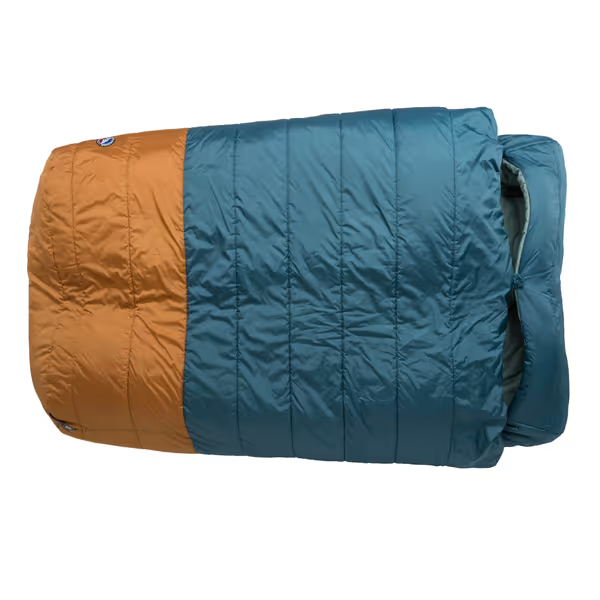
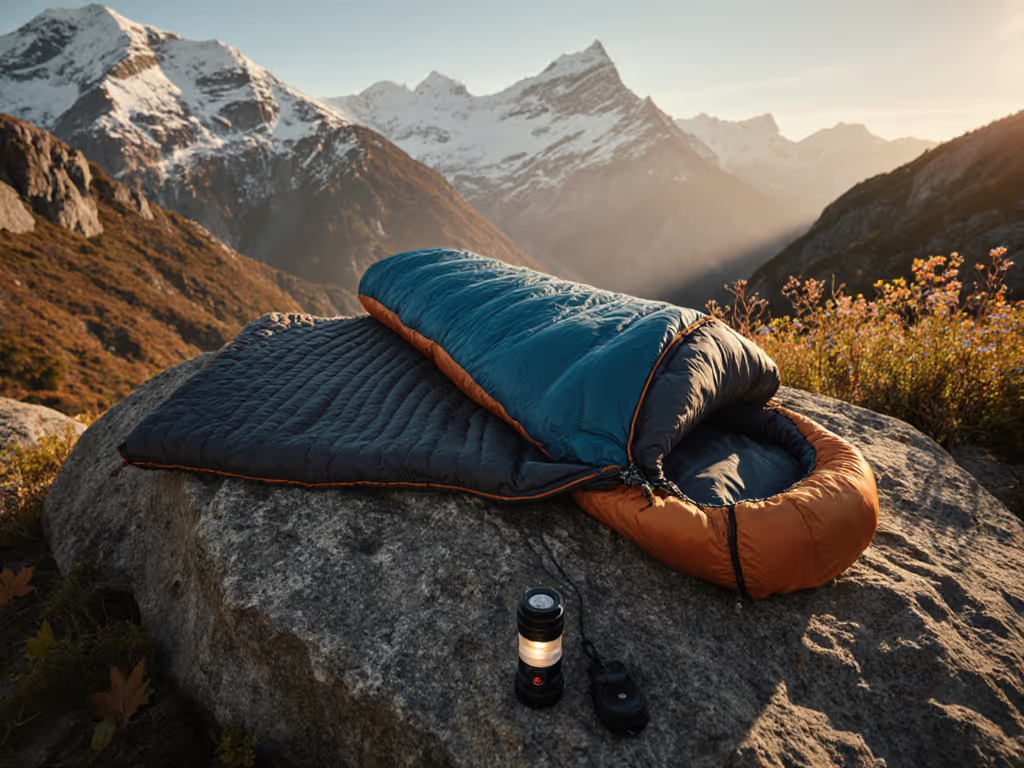
Big Agnes Dream Island 20°F Doublewide Sleeping Bag
Spacious double bag with customizable warmth for ultimate camp comfort.
$299.94
Temperature Rating20°F
Temperature Rating20°F
Pros
Versatile design transforms into a quilt or single bag.
Integrated pad system prevents rolling off, ensures steady warmth.
Roomy interior with individual temperature control for two.
Cons
Larger pack size and heavier weight for two-person use.
Customers find the sleeping bag to be of good quality, comfortable, and warm on the inside. They appreciate its size, with one customer noting its roomy foot box, and its fit, with one mentioning how perfectly it cinches around the sleep mat.
Customers find the sleeping bag to be of good quality, comfortable, and warm on the inside. They appreciate its size, with one customer noting its roomy foot box, and its fit, with one mentioning how perfectly it cinches around the sleep mat.
The magic isn't in one perfect bag, it's in how you combine it with pads, liners, and clothing. A doublewide bag like the Big Agnes Dream Island works for couples not just because of size, but because its PadLok system prevents roll-off (a top complaint for restless senior sleepers). To compare different sleeping pad integration systems, check our thermal efficiency tests across major brands. But remember: no shame for overpacking while learning. Your first three trips should feel too warm, then trim ounces once you know your system.
6. Regional Reality Check: No Universal Solutions
Alpine dry cold needs different buffers than humid East Coast nights. Before choosing top sleeping bags, map your typical camping zones:
- Western mountains: Prioritize low-bulk insulation (down excels here)
- Eastern forests: Hydrophobic down or synthetic handles 80%+ humidity
- Desert nights: Pair bags with R-5.5 pads for 30°F+ temperature drops
A 20°F bag in Colorado might need only R-4.0 pad, but that same combo fails in Maine's damp cold. This is why 'region-agnostic' advice gets campers in trouble. If you camp near the ocean, use our coastal camping sleeping bags guide to handle salt air, humidity, and fog.
Your Action Plan: Build Your First Buffer System
Tomorrow, do this: Grab your current sleeping bag and pad. Calculate your real low limit using our five questions. Then pack for your next trip with a 10°F buffer (extra liner, warmer socks, whatever it takes). Track your sleep quality for 3 nights. You'll discover whether you truly need a new bag, or just a smarter system. I've seen campers sleep comfortably in 'too warm' bags for 20°F nights simply by adding a vapor barrier liner and adjusting hood cinches. That confidence? It comes from planning the night, not just the bag. Now get out there, and sleep safe.
Related Articles