7 Best Photographer Sleeping Bags & Wearable Sleep Systems
By Sofia Petrovic • 22nd Jun
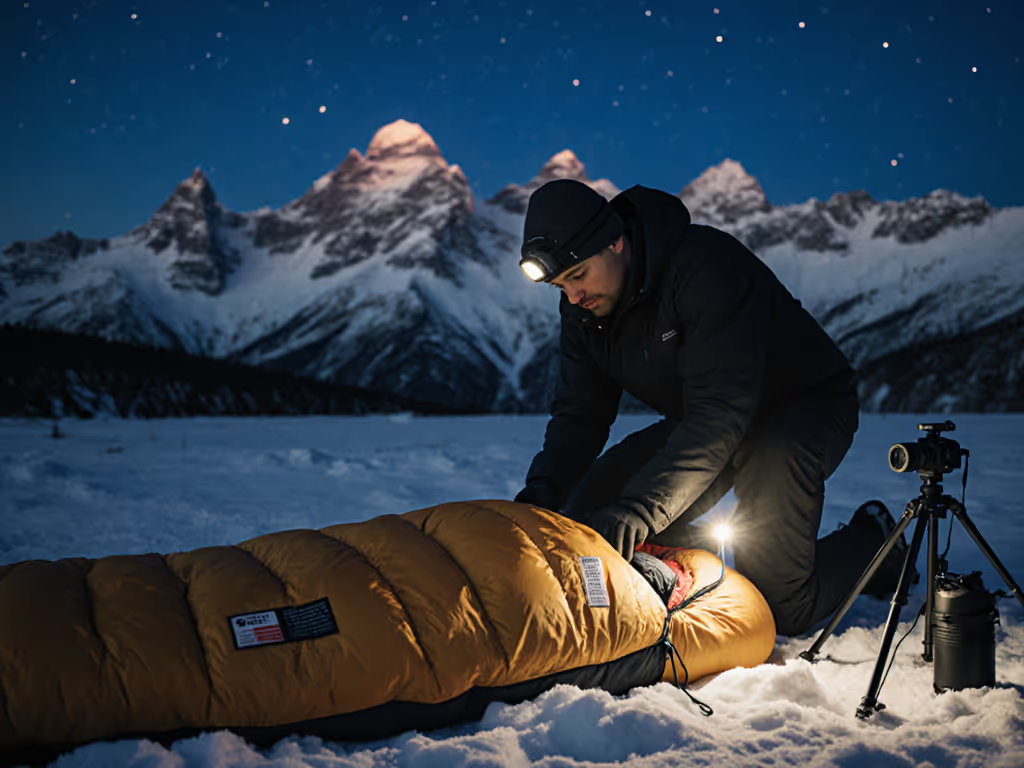
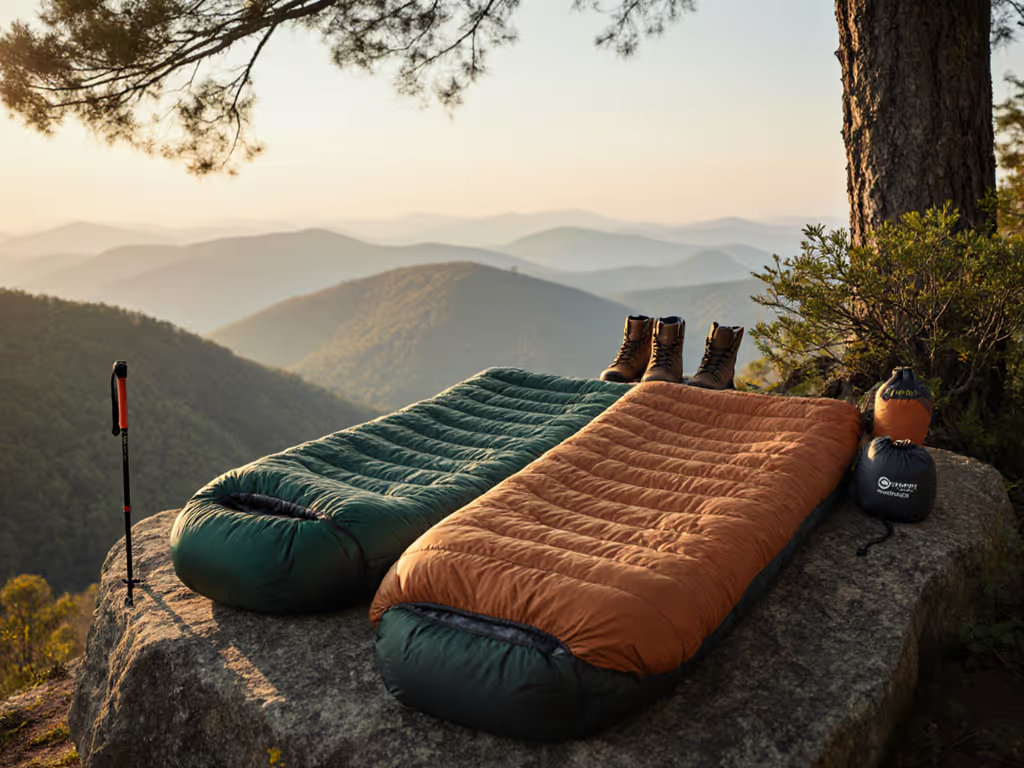
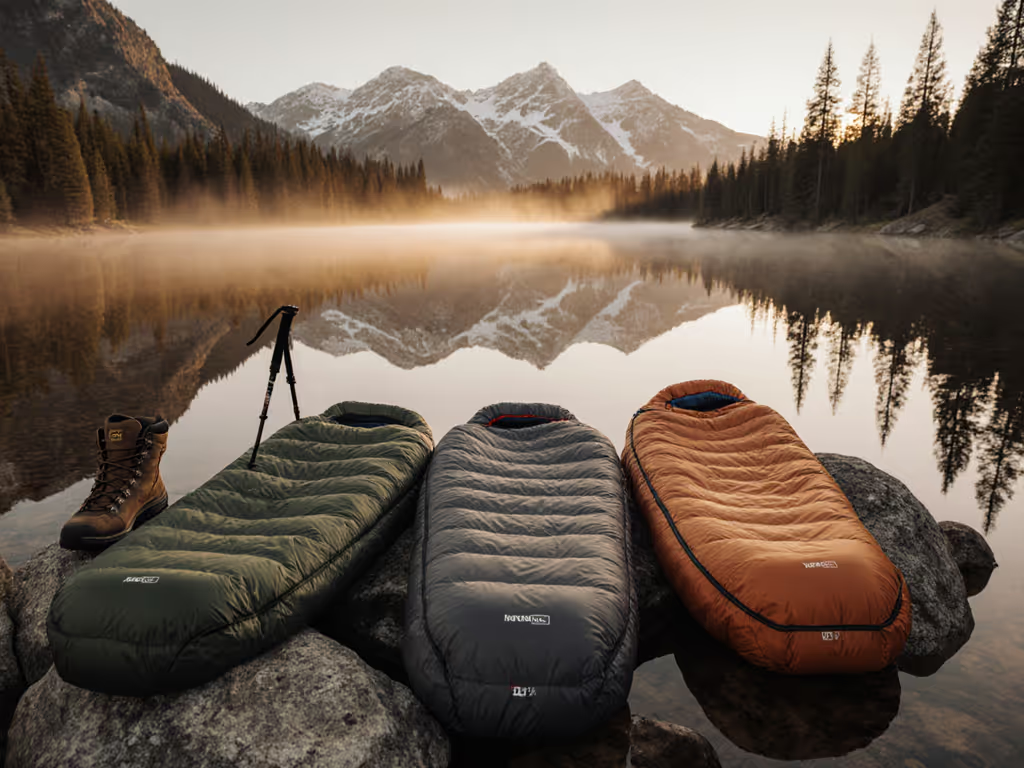
Photographer sleeping bags and wearable sleeping bags solve a specific problem: you want to wait out the cold, then move fast when the sky explodes, but you don't want to shiver through the hours in between. This guide walks you through seven sleep systems that keep you warm and ready to shoot, with clear buffers so you're not gambling a night's sleep on a spec sheet.
Plan the night, not just the number on the tag.
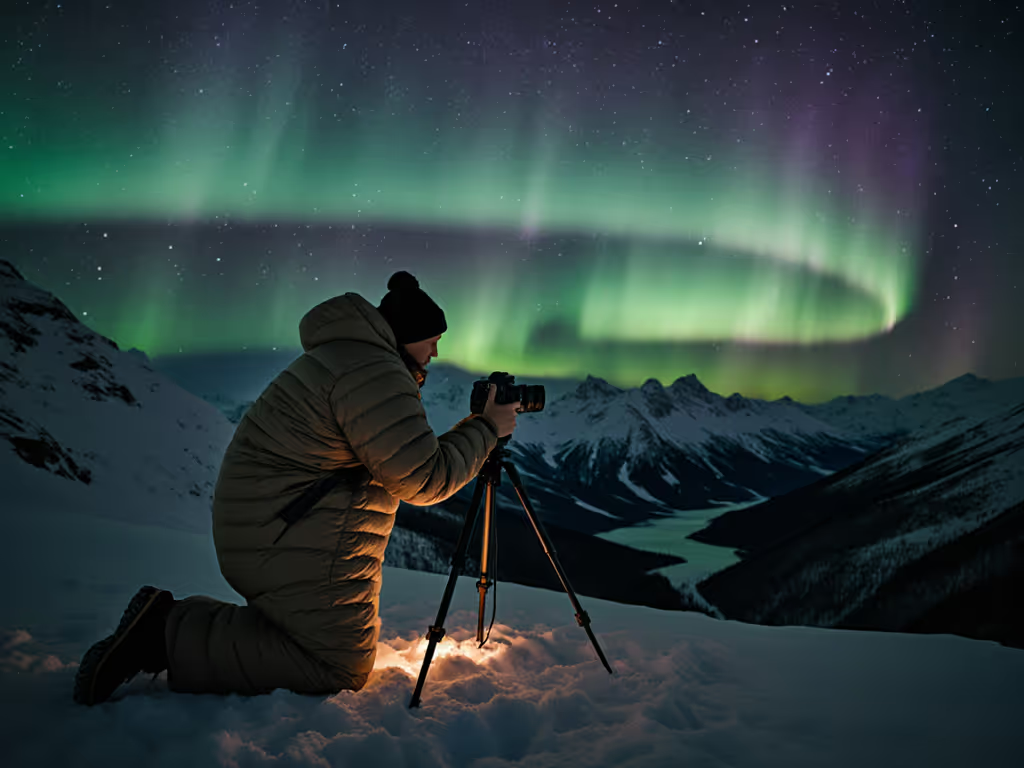
How to Choose a Photographer Sleep System (Quick Checklist)
Before we get into the 7 best options, anchor your decision with a simple planning pass. Good photography expedition sleep systems start with context, not marketing.
Step 1: Set Your Climate Preset
Pick the coldest realistic overnight low you'll shoot in most often:
- Mild van / cabin trips: 40-50°F (4-10°C)
- Shoulder-season car camping & trailheads: 25-40°F (-4 to 4°C)
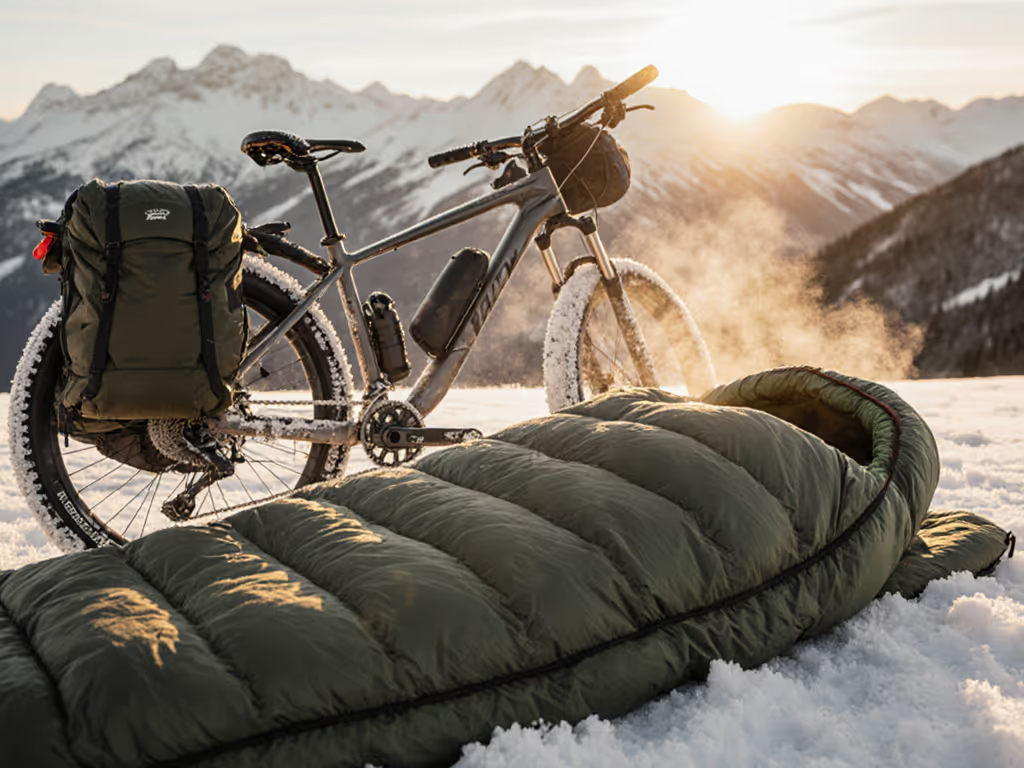
- High alpine, winter aurora, long lenses on snow: 0-25°F (-18 to -4°C)
Now add your personal buffer:
- If you're a cold sleeper, smaller body, or low-calorie eater at night: add 10°F.
- If you're average but sitting still for long compositions: add 5°F.
Work off that adjusted number, not the forecast. If temperature ratings confuse you, read our real-world guide to sleeping bag ratings.
Step 2: Pick Your Movement Style
Your "photographer sleeping bag" is really a choice between two patterns:
-
Stay-in-the-bag shooters
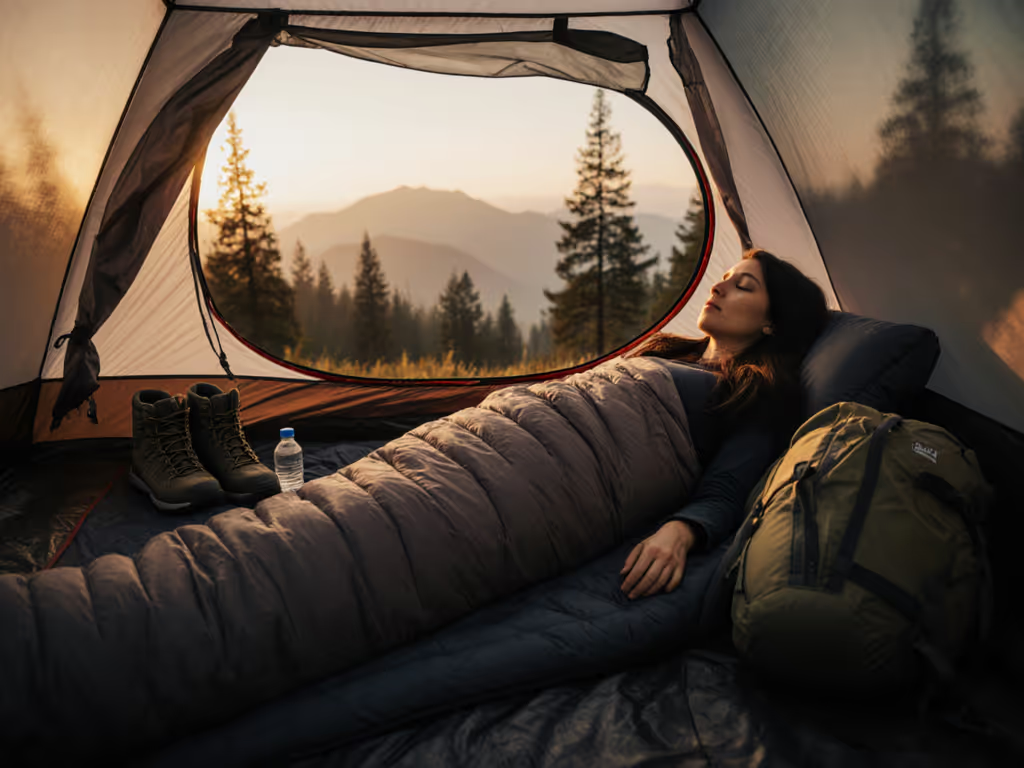
You want a wearable sleeping bag or bag-with-arm-ports to stand, kneel, and work a tripod without fully exiting your insulation. -
Hop-out shooters
You're happy to sleep in a traditional bag, then jump out into a big belay parka and insulated pants for shooting.
This article leans toward stay-in-the-bag options, but I'll include one classic bag for hop-out people who prioritize pure sleep.
Step 3: Lock in Your Pad & Shelter Buffer
Photographers often under-pack pads and over-pack bags. Flip that:
- For below freezing, aim for R-value ≥ 4.5 on your pad.
- For 0-15°F (-18 to -9°C), aim for R-value 5.5-6+ or two pads.
- Prefer double-wall tents or solid inner walls in windy, exposed spots.
If you're out in wind, single-wall shelter, or snow, treat your bag rating as 5-10°F optimistic.
Here's your buffer for messy weather: choose a bag warmer than the number you think you need, then use zips and vents to cool off.
1. Selk'bag Original/Recycled - Best All-Round Wearable Bag for Night Shooters
If you picture wearable sleeping bags, you're probably picturing a Selk'bag. It's essentially a synthetic-insulated jumpsuit with a hood, sleeves, and legs, designed so you can walk, sit, and shoot while staying wrapped in your insulation.
Why photographers like it
-
Full mobility
Separate legs and articulated knees let you spread a tripod, kneel in snow, or climb into the driver's seat without leaving your "bag." -
Hand freedom on demand
Zip-off or fold-back mitts (depending on model) make it easy to tweak camera settings, lock focus, or swap batteries without exposing your whole arm. -
Easy exit/entry
You don't 'get out of bed'; you stand up in it. That's ideal for aurora, Milky Way, or storm-chasing sessions where you're in and out of the tent all night (classic easy entry and exit sleeping bag behavior). -
Good for car and basecamp
Heavier than a true alpine mummy, but excellent when tripod-friendly camping gear matters more than pack weight (car camping, short approaches, van life).
Warmth & best use
- Feels most at home in the 20-40°F (-6 to 4°C) band for average sleepers when paired with a decent pad and wind protection.
- Synthetic insulation handles damp ground, coastal humidity, and tent condensation better than untreated down; see our down vs synthetic sleeping bags comparison for why.
System planning tips
- Pair with: R 4-5 pad for shoulder seasons, a simple double-wall tent, and a mid-weight base layer.
- If your forecast low is 30°F and you're a cold sleeper, treat this as a just-right option, not "overkill."
- Keep a stuff sack inside the torso to hold extra batteries and a lens (this turns your Selk'bag into a simple camera equipment protection sleeping bag for sensitive items that need warmth).
2. Exped Dreamwalker - Most Versatile Walk-Around Down Bag
The Exped Dreamwalker is a clever down bag that converts into a wearable parka-style piece. You can open the foot end, pull the bottom up around your waist, and walk around while your legs are in pants or shells.
Why photographers like it
-
Two modes, one piece
In "sleep mode," it's a warm, baffled down bag. In "walk mode," it's essentially a long down coat. -
Arm freedom
Generous arm openings let you fully extend to adjust a tripod, pan a gimbal, or use trekking poles when hustling to a viewpoint. -
Weight-conscious
Lighter and more compressible than many full-suit style wearable sleeping bags, so it suits backpacking photographers who count ounces.
Warmth & best use
- Depending on version, expect realistic comfort around 20-30°F (-6 to -1°C) with a solid pad and tent.
- Because it's down, it shines on dry, cold trips: winter high desert, continental mountains, or frozen lakes.
System planning tips
- Make this the core of a photography expedition sleep system: bag by night, over-parka in camp when you're mostly standing still.
- If you shoot in damp, coastal, or very humid forests, add:
If forecast dew point is close to air temp and you expect heavy condensation, then pack a lightweight bivy or overbag to keep the down safer. - Carry a thin synthetic jacket as a failsafe layer in case the Dreamwalker gets damp and loses loft.
3. Feathered Friends Rock Wren - Premium Down Cocoon With Arm Ports
The Rock Wren is a classic "camp chore" bag: a high-end down bag built with arm slots and a drawcord bottom so you can poke your feet out and move without ditching your insulation.
Why photographers like it
-
Instant arm access
Unzip the arm slots, pop your hands out, and you can run full manual control without fighting a hood or cuffs. -
Drawcord foot opening
Open the bottom, slide it up, and you have a puffy tunic (skip the cold shock of stepping out into frosty boots). -
Serious warmth-to-weight
Light and extremely lofty, making it attractive for multi-day backcountry trips where weight still matters but you want luxury at camp.
Warmth & best use
- Typical rating is in the 20-25°F (-6 to -4°C) zone. For many cold-sleeping photographers, that's honest comfort around freezing with the right pad.
- Ideal for alpine and high plateau trips where you're stationary behind the camera for long blue hour sessions.
System planning tips
-
Think in climate presets:
- Dry Rockies, 25°F low: Rock Wren + R 4.8 pad + double-wall tent = comfortable margin.
- Windy coastal ridge, 25°F low: same system, but treat it as a 30°F comfort bag due to wind and humidity; add a light synthetic over-quilt or insulated pants.
-
For tripod-friendly camping gear, practice your stance and cord placements at home so you're not fumbling with drawcords at 2 a.m. on a cliff edge.
4. Sierra Designs Mobile Mummy (or Similar) - Best for Restless Side Sleepers
The Sierra Designs Mobile Mummy (and similar concepts) is a mummy-style bag you can wear upright. It has arm ports and a two-way center zipper so you can walk, sit, and even belay while inside your bag.
Why photographers like it
-
Restless sleeper friendly
If you toss and turn, a classic narrow mummy can twist around you. Side sleepers can also check our guide to side-sleeper sleeping bags for fit tips and warmth strategies. The Mobile Mummy moves with you; you rotate inside your shelter, not inside your insulation. -
Center zip access
A center zipper is faster and more intuitive than a side zip when you're half-awake and trying to sit up for a shot. -
Good head coverage
A proper mummy hood protects you during long exposures when you're craning your neck to check the sky.
Warmth & best use
- Commonly found in 15-30°F versions; pick based on your preset and buffers.
- Works across a wide range of use cases: car camping, hut approaches, light winter backpacking.
System planning tips
-
If you're a cold-sleeping side sleeper with a 25°F shoulder-season preset:
- Target a 15°F Mobile Mummy.
- Pair with R 4.5-5 pad and a low-draft tent.
- Expect real-world comfort around 25°F with room to vent.
-
Use the bag's wearable mode to stay warm while doing sunrise time-lapsing: arms out, hood up, torso insulated.
5. Poler Napsack (or Similar Camp Poncho Bag) - Best for Mild Climates & Van Shooters
The Poler Napsack is a hybrid between a camp blanket, poncho, and sleeping bag. It's not designed for serious alpine cold, but it's unbeatable comfort for mild nights, vans, and cabins.
Why photographers like it
-
Super fast transitions
Cinch the hem to sleep, then loosen it and stand up to brew coffee or shoot sunrise without searching for a jacket. -
Social & relaxed fit
Roomy, casual cut - great if you're hanging around a fire, guiding workshops, or shooting in camp rather than full-on backcountry missions. -
Layer-friendly
Works well over a puffy or under a shell, letting you layer on the fly when conditions change.
Warmth & best use
- Best in 35-55°F (2-13°C) conditions when used alone.
- Perfect for vanlife, low-elevation fall trips, and casual star parties where you're close to the car.
System planning tips
-
Treat the Napsack as a modular layer in your photography expedition sleep systems:
- If forecast low is 40-45°F and you have a quality R 3-4 pad and sheltered campsite, then the Napsack alone is fine.
- If lows push toward freezing or wind increases, then use it in combination with a lighter mummy bag or quilt as an over-bag.
-
You can also use it as an extra layer over a more technical bag, turning a 30°F sleep system into something closer to 20-25°F - handy when you misjudge a forecast.
6. Convertible Quilt + Clothing System - Best Lightweight Kit for Backpacking Photographers
Not all photographer sleeping bags need sleeves. A convertible backpacking quilt (like the many "zip-up" or "convert" models on the market) plus a serious puffy jacket and insulated pants can give you both deep-sleep warmth and camp mobility. Learn the tradeoffs in our sleeping bags vs quilts guide.
Why photographers like it
-
Weight savings
A quilt is often 6-10 oz lighter than a comparable fully enclosed bag. That matters when you're also carrying heavy camera bodies, glass, and a robust tripod. -
Dialed venting
Quilts excel at preventing the sweat-then-chill cycle because you can open them up easily. That's key if you hike in warm afternoons but shoot in cold, clear nights. -
Use what you already carry
Your big puffy and insulated pants are part of your safety kit anyway. Building your sleep system around them reduces gear duplication.
Warmth & best use
- A 20°F rated quilt behaves realistically like a 25-30°F comfort system for many average sleepers once drafts are fully blocked.
- Excellent for shoulder-season backpacking where you're hiking to a high overlook to shoot sunsets and sunrises.
System planning tips
Use a simple if/then decision path:
-
If your adjusted preset low is around 25-30°F:
- Pick a 20°F quilt, conservative R 4.5-5 pad, and a double-wall tent.
- Plan to sleep in mid-weight base layers, puffy jacket handy.
-
If wind is strong or you camp above treeline:
- Add a light bivy or wind-resistant inner, and plan to sleep in puffy + pants.
- Treat your 20°F quilt like a 30°F bag in your planning spreadsheet.
For tripod-friendly camping gear, this system shines: you can run out in your puffy and pants, shoot, then slide back under the quilt without wrestling sleeves or zips.
7. Classic Cold-Weather Mummy Bag - Best Sleep-First System for Extreme Cold
Sometimes, mobility is secondary. If you're shooting in serious sub-freezing cold, your priority might be one thing: absolutely dependable, draft-free sleep, then a separate clothing system for shooting.
This slot is for any well-built, expedition-leaning mummy bag in the 0-15°F (-18 to -9°C) range from a reputable maker.
Why photographers still need one in the quiver
-
True recovery sleep
Longer winter nights mean fewer shooting hours and more time to recover. A proper expedition mummy with a well-designed hood and draft collar is still the gold standard for sleeping warm at 3 a.m. -
Moisture and frost management
Higher-end bags often have reinforced, more water-resistant footboxes and hoods that handle tent wall frost better than casual wearable designs. -
Simpler in true storms
When spindrift or full-on blizzard conditions hit, being sealed into a proven mummy is still psychologically and physically comfortable.
Warmth & best use
- Sleep comfort in the 0-20°F (-18 to -6°C) band, depending on rating, pad, and shelter.
- Ideal for photographers doing multi-night winter aurora or high-alpine work, where you might only leave the tent for a few key windows.
System planning tips
-
Treat this as the anchor of a two-part system:
- Bag = sleep and recovery.
- Separate belay parka + insulated pants + over-mitts = shooting uniform.
-
Plan your overnight like this:
- If the forecast low is -5°F and you are a cold sleeper:
- Choose a 0°F or warmer bag, R 6-7 pad stack, solid inner tent, and sleep in a light base layer.
- Expect to be comfortable to about 5-10°F below your bag's comfort rating.
-
For camera equipment protection, keep batteries and a primary lens in a fabric pouch at the foot of your bag so they stay above freezing.
Practical Packing Plan: Turn Ratings into A Night You Can Predict
Here's a simple, repeatable way to pick from these seven options and avoid both overspending and under-packing.
1. Build Your Scenario Table
Make a small 3-row table in your notebook or spreadsheet:
| Scenario | Example Low | Shelter & Pad Target | Sleep System Choice |
|---|---|---|---|
| Mild van / cabin | 40°F | Any pad, draft-resistant van | Poler Napsack or similar camp poncho |
| Shoulder-season trailhead | 25-30°F | R 4.5+ pad, double-wall tent | Selk'bag, Mobile Mummy, or 20°F quilt |
| Winter or alpine missions | 0-15°F | R 5.5-6.5+, solid inner tent | Dreamwalker, Rock Wren, or 0-10°F mummy |
You now have climate presets that turn into clear choices instead of guesswork.
2. Add Your Personal Buffer
For each scenario, adjust for your own profile:
- Cold sleeper, lighter build, or low caloric intake late in the day: target a bag one full rating warmer (e.g., choose 15°F instead of 25°F).
- Average sleeper but long, still shooting sessions: bump one half-step warmer or increase pad R-value.
3. Choose by Movement Style
-
If you hate getting out of your warm cocoon at 2 a.m., lean toward:
- Selk'bag
- Dreamwalker
- Rock Wren
- Mobile Mummy
-
If you're fine hopping out and shooting in a separate insulated clothing system, consider:
- Convertible quilt + clothing
- Classic cold-weather mummy
4. Sanity-Check With a Simple Calculator
Before a trip, run this quick mental "calculator":
- Start with forecast low for your camp altitude.
- Subtract 5-10°F if you camp on an exposed ridge or in strong wind.
- Add 5-10°F if you're a cold sleeper.
- Compare that result to your bag's comfort rating, not the "lower limit."
For you, a 20°F comfort-rated bag + R 4.5 pad + double-wall tent likely equals comfortable sleep around 25-30°F.
If your adjusted number is colder than your bag rating, you either:
- step up to a warmer system from this list, or
- add a liner / over-bag plus thicker pad.
No tough-it-out assumptions, just clear buffer recommendations.
5. Protect Your Camera While You Sleep
Whichever system you pick:
- Keep batteries and one key lens in a soft pouch in your footbox or next to your torso.
- If you're using down in damp conditions, store gear in a separate dry bag inside the tent to avoid punctures or oil transfer onto the shell.
- In serious cold, consider your bag part of a camera equipment protection sleeping bag strategy - heat from your body is the most reliable anti-freeze you carry.
Your Actionable Next Step
Instead of buying "the warmest bag you can afford," take 10 minutes and:
- Write down your primary shooting scenario (e.g., "spring Milky Way, 7,000 ft, lows ~28°F").
- Decide your movement style: stay-in-the-bag vs hop-out shooter.
- Pick one climate preset from the table above and match it to 2-3 options from this list.
- Check your pad R-value and upgrade it first if it's under 4 for freezing nights.
From there, you're no longer shopping randomly, you're selecting a photographer sleeping bag or wearable sleeping bag that fits into a system with clear margins. That's how you go from "I hope I'm warm enough" to treating every blue hour, aurora, or alpine sunrise as a planned, repeatable ritual, shots on the card, sleep in the bank.
Related Articles